
GPS and Fuel Monitoring Solutions for Mixed Commercial Fleets
Fuel is one of the largest operating costs for commercial fleets.
For companies operating trucks, buses, construction equipment, agricultural machinery or generators, simply knowing the vehicle location is often not enough.
Fleet operators increasingly want to understand both:
Where is the vehicle?
and
What is happening to the fuel?
Combining GPS tracking with fuel-level monitoring creates a more complete telematics solution for fleet operations, fuel reconciliation and abnormal fuel-loss detection.
Why GPS Alone Is Not Enough for Fuel Management
A standard GPS tracker can provide important information such as:
- Vehicle location
- Speed
- Ignition status
- Mileage
- Trip history
- Geofence events
However, this data does not directly show how much fuel is inside the tank.
For commercial fleets, the operator may also need to know:
- Current fuel level
- Refueling events
- Sudden fuel decreases
- Fuel changes while the vehicle is stopped
- Fuel activity at specific locations
- Fuel changes compared with mileage and engine operation
This is why a dedicated fuel-level sensor is often used together with a GPS terminal.
A7 GPS Tracker + K25 Fuel-Level Sensor
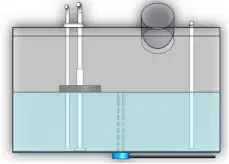
A practical fuel-monitoring architecture can combine a vehicle GPS terminal with a fuel-level sensor.
For example, JHGP can provide the A7 vehicle GPS tracker together with a compatible fuel-monitoring solution such as the K25 fuel-level sensor.
The A7 provides the vehicle-side tracking and communication functions, while the fuel sensor measures fuel-level changes inside the tank.
The combined system can provide the platform with both location and fuel-related information.
Typical data can include:
- GPS position
- Time
- Speed
- ACC / ignition
- Mileage
- Device status
- Fuel level
- Refueling events
- Fuel decreases
- Relevant alarms
Actual available data depends on the selected configuration and installation.
Suitable Applications
A GPS and fuel-monitoring system can be useful for many types of fleets.
Heavy-Duty Trucks
Long-distance commercial trucks often consume large amounts of diesel, making fuel management an important operating issue.
GPS and fuel data can help fleet managers compare:
- Routes
- Stops
- Refueling locations
- Fuel-level changes
- Vehicle movement
Buses and Commercial Vehicles
Transport operators can use location and fuel information together to improve operational visibility.
Construction Equipment
Excavators, wheel loaders, bulldozers, graders and cranes may operate away from traditional road networks.
GPS tracking can identify equipment location, while fuel monitoring provides additional operational information.
Agricultural Machinery
Tractors and agricultural equipment often operate over large areas where manual fuel management can be difficult.
Generators
Stationary generators may not require traditional vehicle tracking, but combining communication hardware with fuel sensors can help monitor fuel availability and abnormal changes remotely.
How Fuel-Level Monitoring Works
The basic architecture is:
Fuel Sensor → GPS / Telematics Terminal → Cellular Network → Platform
The fuel sensor measures the fuel level.
The GPS terminal collects the sensor information together with vehicle and location data.
The data is then sent to the fleet-management platform.
This allows the software to analyze fuel changes together with:
- Vehicle position
- Time
- Ignition status
- Mileage
- Movement
- Other telematics data
Detecting Refueling and Fuel Loss
A useful fuel-monitoring system should not simply display a percentage.
The real operational value comes from analyzing how the fuel level changes over time.
For example:
Refueling
If the fuel level rises significantly within a short period, the system can identify a possible refueling event.
Fuel Decrease
If the fuel level drops rapidly while the vehicle is parked, the system can flag a possible abnormal fuel-loss event for further investigation.
Fuel Reconciliation
Fleet operators can compare fuel activity with:
- Driver reports
- Fuel-station records
- Vehicle mileage
- Trip records
- Operational schedules
This can improve the accuracy of fleet fuel reconciliation.
Installation Matters
Fuel monitoring is highly dependent on correct installation and calibration.
A high-quality sensor alone cannot guarantee accurate results if it is installed incorrectly.
Important factors include:
- Tank shape
- Tank height
- Sensor position
- Calibration
- Vehicle vibration
- Fuel movement
- Installation environment
For this reason, sample installation and field verification should be completed before a large fleet rollout.
Fuel Monitoring for Mixed Fleets
Many fleets, especially in developing markets, do not operate only one truck brand or vehicle model.
A single fleet may contain:
- European trucks
- Chinese trucks
- Japanese vehicles
- Indian commercial vehicles
- Construction machinery
- Agricultural equipment
- Generators
This creates a challenge for vehicle-data integration.
A flexible GPS and sensor architecture can be useful because the system does not need to depend entirely on a specific vehicle manufacturer.
The correct hardware should be selected based on the actual vehicle, fuel tank, available interfaces and required data.
Integrating Fuel Data Into Your Own Platform
Some fleet operators already have their own software.
In this case, fuel and GPS data may need to be integrated into the customer's existing platform.
JHGP supports different integration approaches depending on the project, including API, data forwarding and direct GPS device communication.
Learn more about our MQTT GPS Tracker & API Integration capabilities.
Customers developing their own fleet-management system can also evaluate communication-protocol integration rather than relying only on standard API polling.
Start With a Pilot
Fuel-monitoring projects should begin with a controlled pilot.
A typical process includes:
- Select representative vehicles.
- Confirm tank dimensions.
- Install the GPS terminal.
- Install and calibrate the fuel sensor.
- Verify GPS data.
- Verify fuel-level data.
- Perform controlled refueling tests.
- Perform controlled fuel-reduction tests.
- Compare platform records with physical fuel changes.
- Adjust configuration before wider deployment.
A small pilot helps identify installation, calibration or software issues before hundreds or thousands of vehicles are equipped.
GPS Hardware for Fleet and Fuel Monitoring
JHGP develops GPS tracking hardware and telematics solutions for commercial fleet applications.
Our solutions can combine vehicle tracking with suitable external sensors and platform integration according to project requirements.
Explore our GPS Tracking Devices or learn more about GPS Tracker OEM & ODM Services if your project requires customized hardware, firmware, communication protocols or sensor integration.
As a GPS tracker manufacturer in China, JHGP works with fleet-management companies, system integrators and IoT solution providers that need hardware to fit into a larger operational system.
For a fuel-monitoring project, send us your vehicle types, tank dimensions, target country, fleet size and required platform architecture.
We can then evaluate a suitable GPS and fuel-monitoring configuration.