
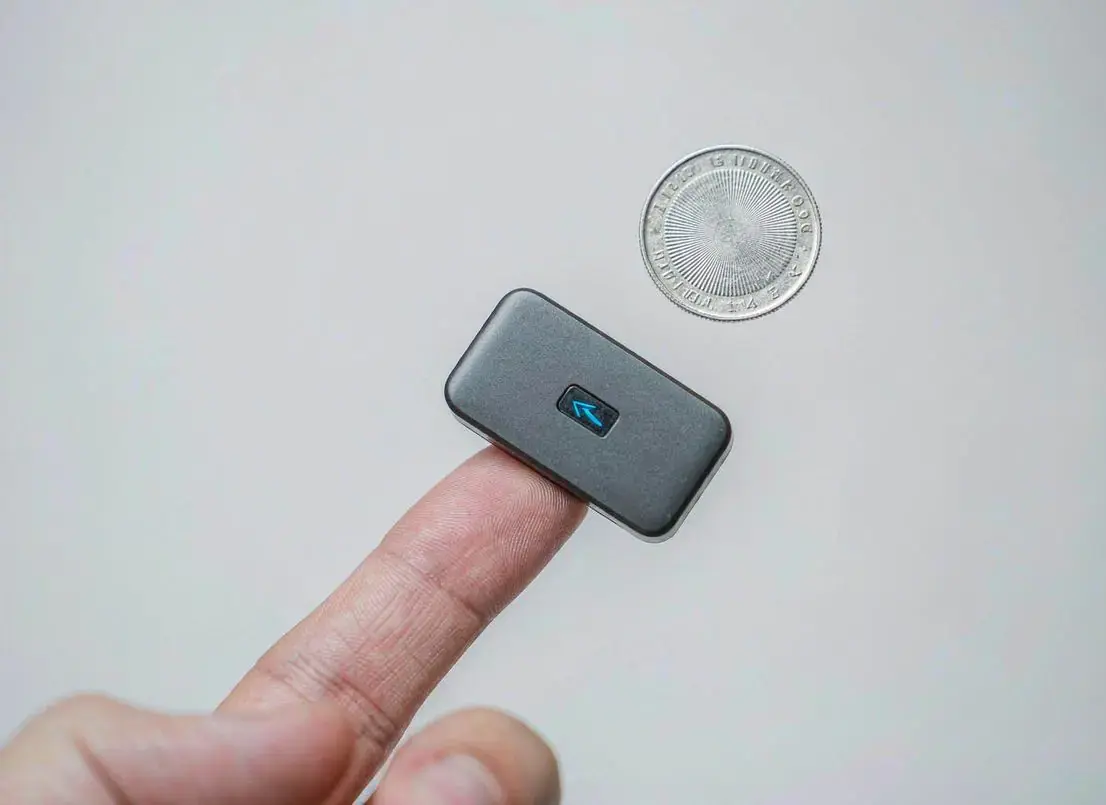
A GPS tracker used for a moving vehicle and a GPS tracker used for long-term asset protection should not operate in the same way.
A vehicle tracker can usually obtain continuous external power.
An asset tracker may need to remain installed for months or years without charging.
This changes the entire product strategy.
For long-term asset monitoring, battery life depends not only on battery capacity but also on how often the device wakes up, how it determines location and how frequently it communicates with the cellular network.
Understanding these factors is essential when selecting a long-battery-life GPS tracker.
What Is a Long-Standby Asset Tracker?
A long-standby asset tracker is designed to spend most of its time in a low-power state.
Instead of continuously maintaining a cellular and GNSS connection, the device wakes according to a predefined schedule or event.
A typical cycle may be:
Sleep → Wake Up → Acquire Location → Connect to Network → Upload Data → Return to Sleep
Reducing the number and duration of these active periods can significantly extend battery life.
This makes long-standby GPS trackers suitable for:
- Valuable equipment
- Machinery
- Trailers
- Tools
- Electronics
- Rental assets
- Stored vehicles
- Theft-recovery applications
- Portable assets
- Other non-powered equipment
Reporting Frequency Has a Major Impact on Battery Life
One of the biggest factors affecting battery life is how often the device wakes up.
For example, a device reporting every few seconds has completely different power requirements from a tracker reporting once per day or once per week.
Every wake-up may require:
- Cellular network registration
- Position acquisition
- Data communication
- Sensor operation
- Processor activity
Therefore, customers should first ask:
Do we need continuous tracking, or do we mainly need to know that the asset is still present?
For many theft-recovery applications, continuous positioning during normal operation may not be necessary.
A low-frequency check-in strategy can provide much longer standby time.
If an asset is reported stolen, the device can then switch to a more active tracking mode where supported.
GNSS Is Accurate, but It Uses More Power
GNSS positioning is important when accurate outdoor location is required.
However, acquiring a satellite position can consume more power than some alternative positioning methods.
The time required to obtain a GNSS fix is also affected by:
- Installation location
- Building structure
- Metal shielding
- Antenna orientation
- Weather and environment
- Satellite visibility
For an asset installed inside electronic equipment, machinery or a metal enclosure, GNSS acquisition may take longer or may not always be available.
This is why some long-standby tracking strategies use multiple positioning methods.
Wi-Fi Positioning for Low-Power Asset Tracking
Wi-Fi positioning can be useful in environments where nearby Wi-Fi access points are available.
The tracker does not necessarily need to connect to the Wi-Fi network.
Instead, it can scan nearby Wi-Fi information and use this data as part of a location service.
For certain applications, Wi-Fi positioning can reduce the need for frequent GNSS acquisition.
This can be particularly useful for assets located:
- Inside buildings
- In offices
- In warehouses
- In residential areas
- In urban environments
Cellular Base-Station Positioning
Cellular-network information can also provide approximate location.
It is generally less precise than GNSS but can offer useful location context when high accuracy is not required.
For long-standby asset tracking, the positioning strategy can therefore be designed around application priorities.
A possible priority sequence is:
Wi-Fi → Cellular Location → GNSS
If Wi-Fi positioning is available, the device uses it first.
If not, it can try cellular location.
GNSS can be used when a more accurate location is required or when other positioning methods are unavailable.
The exact strategy depends on the tracker model and firmware configuration.
Why Signal Strength Matters
Battery-life estimates are always affected by cellular conditions.
A tracker operating in strong network coverage may connect quickly and upload its data.
A tracker operating in weak coverage may need more time and energy to:
- Search for a network
- Register
- Retry communication
- Upload data
This is one reason why it is difficult to provide a single exact battery-life figure that applies to every deployment.
The same tracker may achieve different real-world battery life in:
- London
- Rural areas
- Underground parking
- Warehouses
- Metal equipment
- Remote industrial locations
Customers should therefore treat battery-life specifications as application-dependent rather than absolute.
Battery Capacity Is Only Part of the Solution
Using a larger battery can increase standby time, but it also affects:
- Product dimensions
- Weight
- Housing design
- Shipping
- Charging time
- Installation options
A better engineering approach is usually to optimize both:
Battery Capacity + Power Management Strategy
For projects requiring very long standby periods, JHGP can evaluate existing long-battery-life products or larger-capacity configurations according to quantity and application requirements.
Explore our GPS Tracking Devices for available asset-tracking options.
Normal Mode and Theft-Recovery Mode
A useful strategy for asset protection is to separate normal operation from emergency tracking.
Normal Mode
During normal use:
- Device remains in deep sleep
- Low-frequency check-in
- Minimal positioning
- Minimal cellular communication
The goal is maximum battery life.
Theft-Recovery Mode
After a theft event is identified:
- Reporting frequency increases
- GNSS may be activated more often
- Location updates become more frequent
- Device can provide more detailed tracking information
This architecture avoids consuming large amounts of power while the asset is safe.
Choosing the Right Asset Tracker
Before selecting a battery-powered tracker, define the real use case.
Important questions include:
- Which country will the tracker operate in?
- What cellular bands are required?
- Is the asset normally indoors or outdoors?
- Is GNSS accuracy required at every check-in?
- Can Wi-Fi positioning be used?
- How often should the device report?
- How long must the battery last?
- Is the battery rechargeable?
- Is a replaceable battery required?
- What tracker dimensions are acceptable?
- Is waterproofing required?
- Does the asset contain large metal components?
- What happens after the asset is stolen?
These answers are more important than selecting a tracker based only on the advertised battery capacity.
Test Before Large Deployment
For long-battery-life tracking projects, sample testing is especially important.
The customer should test the device in the real installation environment and measure:
- Network connection time
- Position-acquisition time
- Reporting success
- Battery consumption
- Indoor positioning behavior
- GNSS performance
- Sleep current
- Recovery after weak network conditions
Only after real-world testing should a long-term battery-life estimate be used for large-scale deployment planning.
OEM Long-Standby GPS Tracker Development
Some projects require a different battery size, enclosure, reporting strategy or communication logic.
JHGP can evaluate customized GPS tracker projects involving:
- Battery configuration
- Firmware
- Sleep strategy
- Positioning priority
- Reporting intervals
- Cellular configuration
- Server communication
- Device enclosure
- OEM branding
Learn more about our GPS Tracker OEM & ODM Services.
Customers with their own asset-management platform can also connect compatible devices to their own backend using supported integration methods. See our MQTT GPS Tracker & API Integration page for more information.
Long-Battery-Life GPS Hardware From JHGP
JHGP develops battery-powered GPS tracking devices for different asset-monitoring applications.
As a GPS tracker manufacturer in China, our goal is not simply to provide the largest possible battery.
The correct solution requires balancing:
Device Size + Battery Capacity + Positioning Method + Reporting Frequency + Cellular Conditions + Required Tracking Accuracy
If you are evaluating a long-standby GPS tracker for equipment, electronics, rental assets or theft recovery, send us your target country, reporting requirements, expected battery life, installation environment and quantity.
We can then recommend a suitable existing tracker or evaluate whether a customized configuration is required.